


 English
 русский
 Español
Noticias de la industria
Inicio / Noticias / Noticias de la industria / El proceso de producción del portaescobillas mezclador con 2 escobillas de carbón
el Portaescobillas mezclador con 2 escobillas de carbón Normalmente consta de una carcasa que fija ambas escobillas de carbón en su lugar, permitiéndoles mantener un contacto continuo con la armadura. Este diseño garantiza que el motor funcione de manera eficiente y confiable. Con el tiempo, las escobillas se desgastan debido a la fricción y es necesario reemplazarlas. El titular garantiza que el proceso de sustitución sea sencillo, facilitando el mantenimiento a los usuarios.
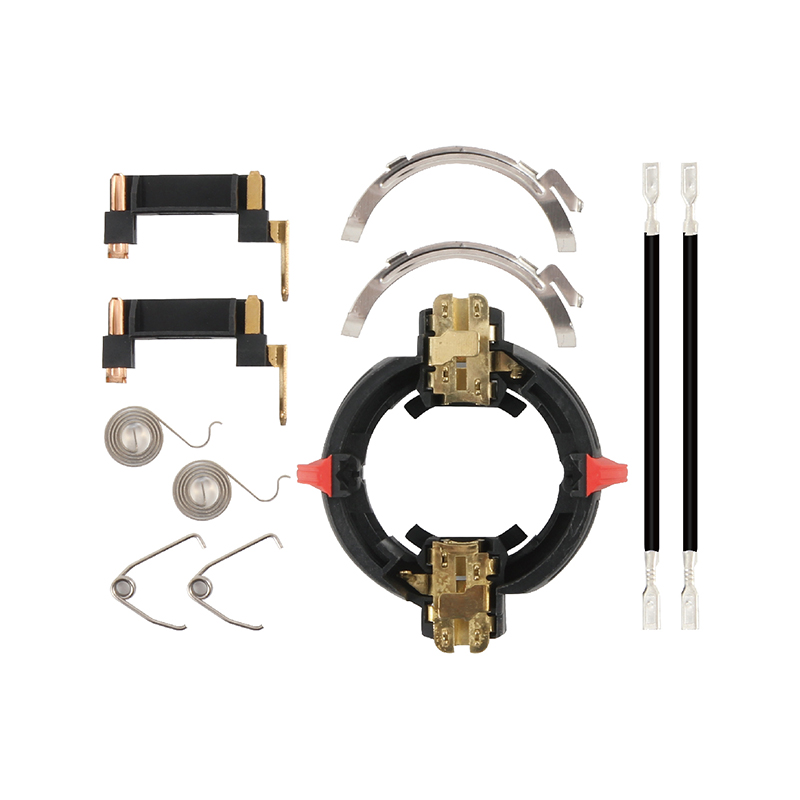
el quality and durability of the Mixer Brush Holder with 2 Carbon Brushes are largely determined by the materials used in its production. The following are some of the key materials involved in the manufacturing process:
1. Material de la carcasa
el housing of the Mixer Brush Holder is typically made from durable plastic or metal, depending on the design requirements. High-grade plastics are often used because they offer good electrical insulation properties, ensuring that the motor operates safely without the risk of short circuits. In some cases, metal housings are used for additional strength and durability, particularly in heavy-duty applications.
2. Escobillas de carbón
el carbon brushes themselves are made from a mixture of carbon and other conductive materials, such as copper or graphite. These materials are chosen for their ability to withstand high temperatures and the wear caused by constant friction with the motor's armature. The quality of the carbon material used in the brushes is crucial, as it directly affects the motor's performance, efficiency, and longevity.
3. manantiales
A menudo se utiliza un resorte junto con el portaescobillas mezclador con 2 escobillas de carbón para garantizar que se aplique la cantidad adecuada de presión a las escobillas. El resorte ayuda a mantener un contacto constante entre las escobillas y la armadura, evitando cualquier pérdida de potencia. Estos resortes generalmente están hechos de acero de alta resistencia para garantizar que proporcionen la fuerza necesaria y mantengan su integridad a lo largo del tiempo.
Pasos en el proceso de producción del portaescobillas mezclador con 2 escobillas de carbón
el production of the Mixer Brush Holder with 2 Carbon Brushes involves several precise steps to ensure high quality and reliability. Here is an overview of the key stages in the manufacturing process:
1. Diseño y creación de prototipos
el step in the production of the Mixer Brush Holder with 2 Carbon Brushes is the design phase. Engineers and designers develop a blueprint that specifies the exact dimensions, material properties, and the overall design of the holder. This design phase ensures that the part will fit within the motor assembly and function as required.
Una vez finalizado el diseño, se crea un prototipo utilizando software de diseño asistido por computadora (CAD) e impresión 3D u otras técnicas rápidas de creación de prototipos. Este prototipo permite al fabricante probar el diseño, identificar cualquier problema y realizar los ajustes necesarios antes de pasar a la producción en masa.
2. Moldeo y fundición
el next step is the molding or casting of the housing for the Mixer Brush Holder with 2 Carbon Brushes. If the holder is made from plastic, injection molding is commonly used. During this process, plastic pellets are heated until they melt, then injected into a mold that shapes the holder into its final form. For metal components, casting or die-casting is typically used to create the housing and other necessary parts.
el molding process is precise, as it must create a durable housing that can securely hold the carbon brushes and resist wear over time. The molds are often custom-designed to ensure that each component meets the necessary specifications.
3. Producción de escobillas de carbón
Una vez que la carcasa está lista, el siguiente paso consiste en fabricar las escobillas de carbón. Las escobillas de carbón se fabrican mezclando carbón con metales conductores como cobre o grafito. Luego, con la mezcla se forma un bloque sólido, que se corta en la forma y el tamaño adecuados para el soporte. Las escobillas se inspeccionan cuidadosamente para garantizar que estén suaves y libres de defectos que puedan afectar el rendimiento del motor.
Una vez formada la escobilla de carbón, se somete a un tratamiento de alta temperatura para mejorar su durabilidad y resistencia al desgaste. Luego, el cepillo se termina con una capa de cobre o grafito, según la aplicación específica.
Derechos de autor © Yongkang Creator Import & Export Co., Ltd. Reservados todos los derechos.
